Cowboy Ribeye
Cowboy Ribeye
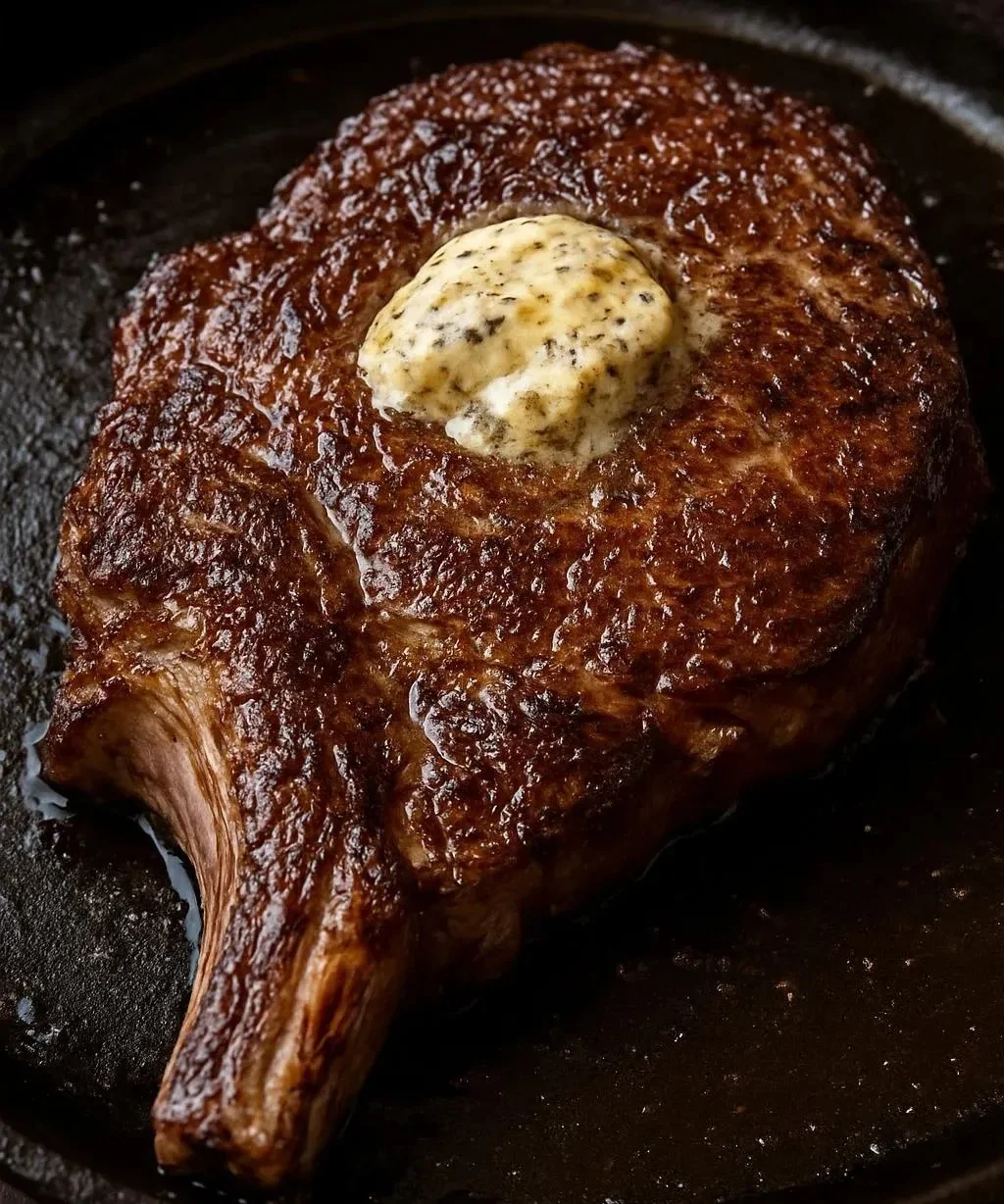
A thick, bone-in ribeye prized for a bold crust and deep beefy flavor deserves a clear plan from seasoning through resting to get the best results every time. This guide gives exact temperatures, timing strategies, equipment choices, and troubleshooting so you can produce a perfect thick-cut steak whether you grill, pan-sear, or use the oven or sous-vide. 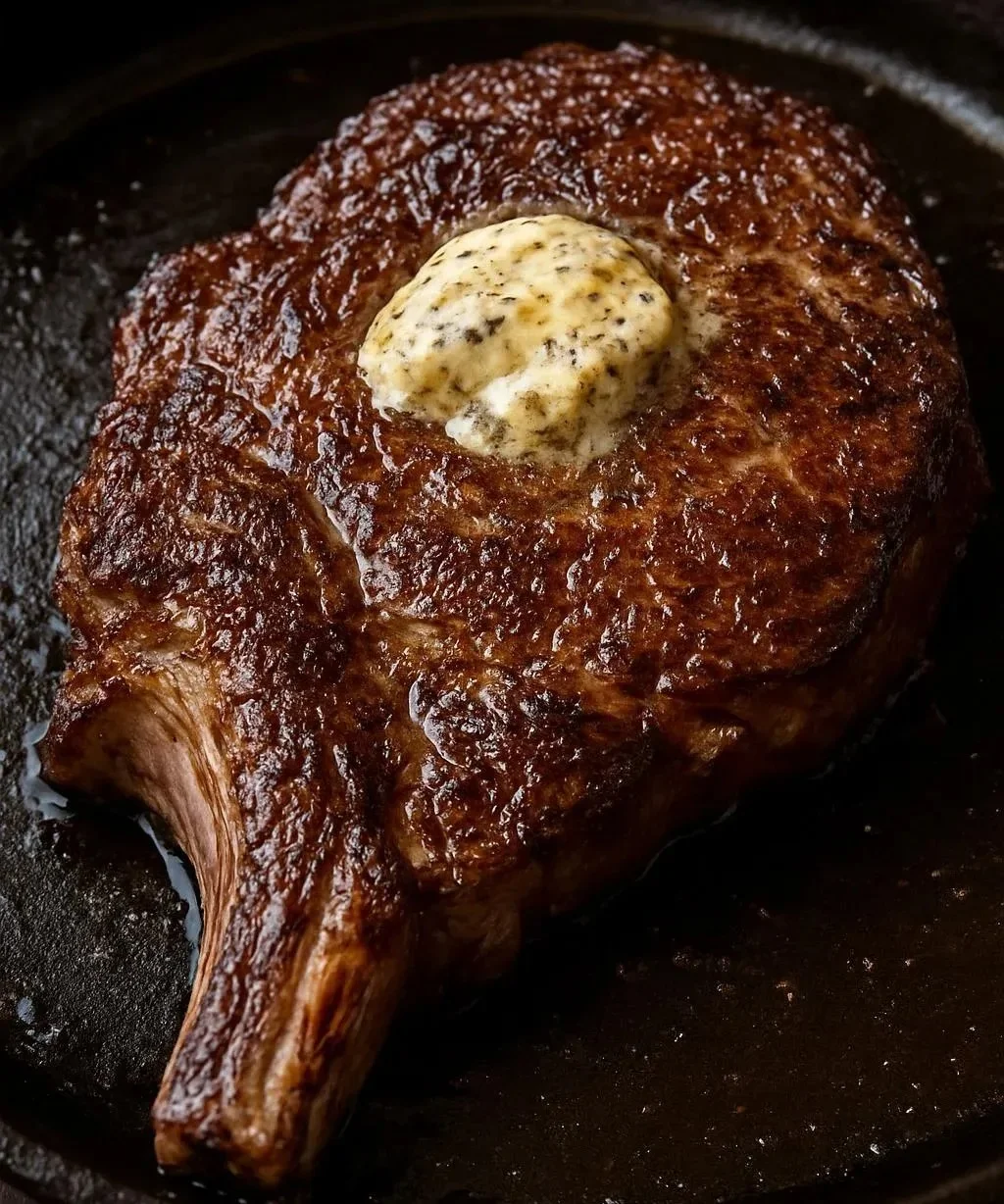
Prefer a no-fuss side that complements bold steaks? Try a one-pan cowboy butter tortellini steak bites recipe for a quick, rich accompaniment that finishes while your meat rests.
Why the thick, bone-in cut performs differently than boneless steaks
The bone and thickness change how heat travels and how flavors develop. The bone slows heat transfer, which increases carryover cooking and helps keep the meat juicier near the bone. A thick cut (1.5–2.5 inches) gives you more control over the interior temperature while allowing a pronounced Maillard crust on the exterior.
Because of that heat behavior, searing too aggressively or starting on high heat can overcook the outer ring before the center reaches target doneness. That’s why low-and-slow preheating combined with a hot finish (reverse sear) or a gentle sous-vide then sear approach yields the most predictable results for thick, bone-in steaks.
Choosing and prepping the steak for best searing and flavor
Select steaks with good marbling and a firm texture. Look for:
- A visible rib bone about 1–2 inches long for presentation and heat control.
- Even thickness across the steak to avoid thin spots overcooking.
- Freshly cut surface; dry-aged if you prefer concentrated umami notes.
Prep steps:
- Pat dry with paper towels; moisture prevents a proper crust.
- Salt early: for thick steaks, season liberally with kosher salt at least 1 hour before cooking or up to overnight in the fridge for deeper penetration.
- Add coarse-cracked black pepper just before searing to prevent burning; fresh herbs and garlic can be used during basting.
Equipment that makes reliable results repeatable
Using the right tools improves precision and reduces guesswork:
- Heavy cast-iron skillet or flat-top griddle for even high-heat searing.
- Instant-read thermometer for checking internal temperature.
- Wire rack and baking sheet for low-and-slow oven cooking.
- Tongs and a metal spatula (avoid piercing the meat).
- Optional: sous-vide circulator for precise temperature control and consistent doneness edge-to-edge.
Two dependable cooking methods with exact times and temperatures
- Reverse-sear (oven to skillet) — best for home cooks who want a controllable interior and a perfect crust.
- Preheat oven to 225°F (107°C). Place steak on a wire rack over a baking sheet.
- Roast until internal temperature is 10–15°F below target (for medium-rare target 125°F final; remove at 110–115°F).
- Rest 5 minutes, then heat a skillet over high heat with a high-smoke-point oil. Sear 45–60 seconds per side until a deep crust forms; baste with butter and aromatics for the last 30 seconds.
- Final temps: Rare 120°F, Medium-rare 125°F, Medium 135°F.
- Sous-vide then sear — ideal for uniform doneness edge to edge.
- Vacuum-seal seasoned steak and cook at desired final temperature: 125°F for medium-rare or 130°F for medium.
- Time: 1.5–3 hours depending on thickness (2-inch ~2 hours).
- Remove, pat dry thoroughly, then sear in a screaming-hot skillet 30–60 seconds per side with butter basting.
Common timing notes: A 2-inch bone-in steak will take roughly 35–55 minutes in a 225°F oven to hit 110–115°F internal. Always rely on an instant-read thermometer rather than clock time.
Step-by-step pan-basting technique for maximum flavor and crust
- Preheat skillet until very hot and add 1–2 tablespoons of oil.
- Sear the steak without moving for 45–60 seconds, flip and sear the other side.
- Reduce heat to medium, add 2 tablespoons butter, smashed garlic cloves, and fresh thyme or rosemary.
- Tilt the pan and continuously spoon the melted butter over the top of the steak for 1–2 minutes to build flavor.
- Use thermometer to confirm target temperature, then remove to a cutting board and tent loosely with foil for 5–10 minutes to allow carryover cooking and juices to redistribute.
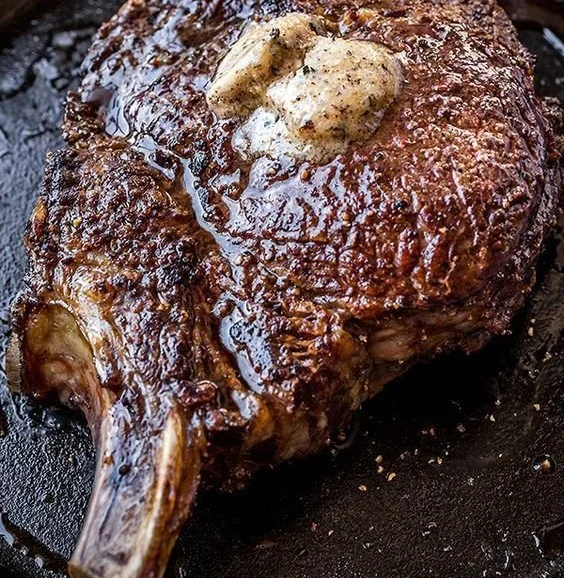
Simple compound butters and sauces that elevate the meat
Finishing with a high-quality butter or quick pan sauce enhances richness without masking beef flavor. Try:
- Compound butter: mix softened butter with parsley, lemon zest, minced garlic, and smoked paprika.
- Pan sauce: deglaze hot skillet with 1/3 cup red wine or beef stock, scrape fond, add 1 tablespoon butter and reduce until glossy.
- Chimichurri: bright herb sauce cuts through fat and complements char.
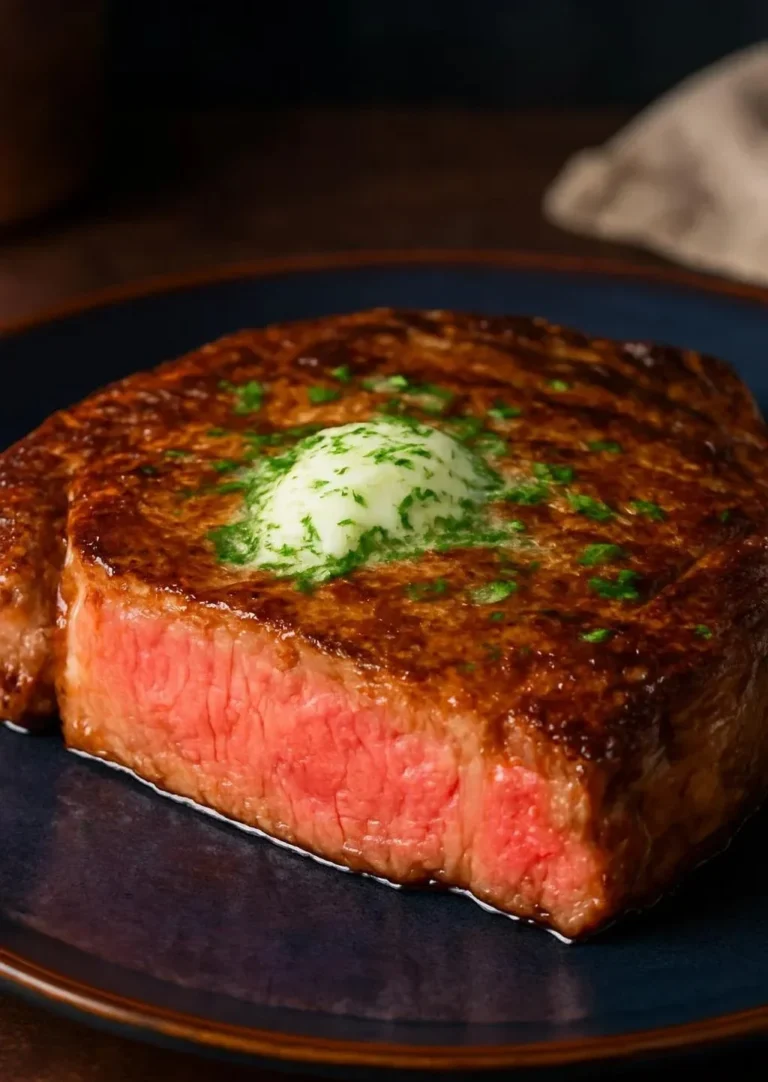
A well-made compound butter placed on the steak while it rests melts into the crevices and creates a restaurant-quality finish.
Best side pairings and beverage matches
Hearty, savory sides balance a rich steak:
- Starch: roasted fingerling potatoes, creamy gratin, or the aforementioned one-pan tortellini for a quicker option.
- Vegetables: charred asparagus, blistered shishito peppers, or a simple arugula salad with lemon vinaigrette to add acidity.
- Drinks: full-bodied reds (Cabernet Sauvignon, Malbec), robust ales, or a smoky mezcal cocktail for contrast.
If you want a one-pan side finished with the steak’s resting time, consider a rich pasta or buttered gnocchi that can be ready in 10–15 minutes.
(Body link) For an easy, complementary skillet side that finishes quickly, the one-pan cowboy butter tortellini steak bites recipe pairs particularly well with butter-basted steaks.
Variations and alternative approaches for different equipment or flavor profiles
- Grill method: use two-zone heat. Start over indirect heat until 10–15°F below target, then finish over direct high heat for crust. Watch flare-ups from rendered fat.
- Reverse sear on a pellet smoker gives subtle smoke—pull at 10–15°F below target then sear.
- Dry-aging: if available, dry-aging concentrates beef flavor; adjust salt slightly less because flavors intensify.
- Spice rubs: replace classic salt-and-pepper with coffee grounds, smoked paprika, and brown sugar for a bold crust—use sparingly to avoid burning.
For weeknight convenience, thinner steaks cook faster but won’t benefit from reverse-sear; use high heat and monitor closely.
Common mistakes and how to avoid them
- Mistake: Skipping the thermometer — guesswork leads to overcooking. Use an instant-read probe.
- Mistake: Searing a wet steak — always pat dry to get a proper crust.
- Mistake: Flipping too often — let the surface develop a crust by limiting flips.
- Mistake: Overcrowding the pan — cook one or two steaks at a time to maintain surface temperature.
- Mistake: Not letting it rest — slicing too early releases flavorful juices; rest 5–10 minutes depending on thickness.
Address these at each stage to raise consistency and reduce wasted effort.
Storage, reheating, and leftovers
- Refrigerate cooked steak within two hours in an airtight container; use within 3–4 days.
- Reheat gently to retain juiciness: oven at 250°F until warmed to 100–110°F, then quick sear to refresh the crust. Alternatively, sous-vide reheating at target temperature preserves texture.
- For freezing, slice into meal-sized portions and vacuum-seal or wrap tightly; freeze up to 3 months. Thaw overnight in the fridge before reheating.
Frequently asked questions
Q: How much salt should I use per pound?
A: For coarse kosher salt, use roughly ¾ to 1 teaspoon per pound when seasoning an hour before cooking; if salting overnight, slightly less is fine because of extended penetration.
Q: Does the bone make the steak cook slower?
A: Yes, the bone insulates the meat, slowing heat transfer and increasing carryover cooking. Remove from heat a few degrees earlier than your target.
Q: Can I cook this cut on a gas grill without overcooking?
A: Yes—use a two-zone setup and reverse sear or finish over direct heat briefly. Keep a lid on for indirect portions to stabilize temperature.
Q: What internal temperature should I aim for to get medium-rare?
A: Pull at 120–125°F for medium-rare final temps around 125–130°F after resting.
Q: Is butter basting necessary?
A: It’s not mandatory but it adds flavor and helps develop a more complex crust when done briefly; use in the last 30–60 seconds of searing.
For an easy companion dish idea that cooks fast while your steak rests, consider this one-pan cowboy butter tortellini steak bites recipe to streamline dinner prep.
Final serving tips and plating
Slice against the grain into generous slabs, arrange bone-side up for presentation, and top with a pat of compound butter or a spoonful of pan sauce. Serve warm plates, offer acid-forward garnishes like lemon wedges or pickled shallots to cut richness, and let diners finish with coarse sea salt if desired.