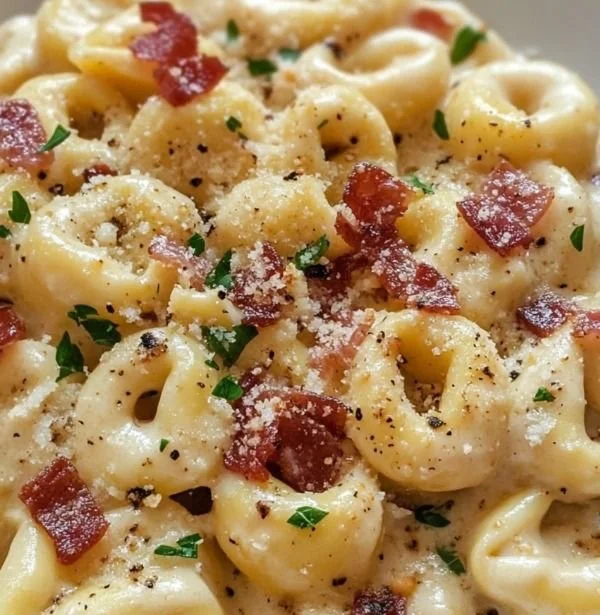
Tortellini Carbonara (30 minutes)
Tortellini Carbonara (30 minutes)
This recipe turns store-bought filled pasta into a quick, silky sauce that’s ready on weeknights without sacrificing classic technique. It focuses on timing, temperature control, and a short ingredient list so you can get dinner on the table in half an hour while still achieving an authentic, glossy finish. For another easy tortellini dinner idea that’s equally fast, see this easy chicken tortellini soup recipe for a comforting alternative.
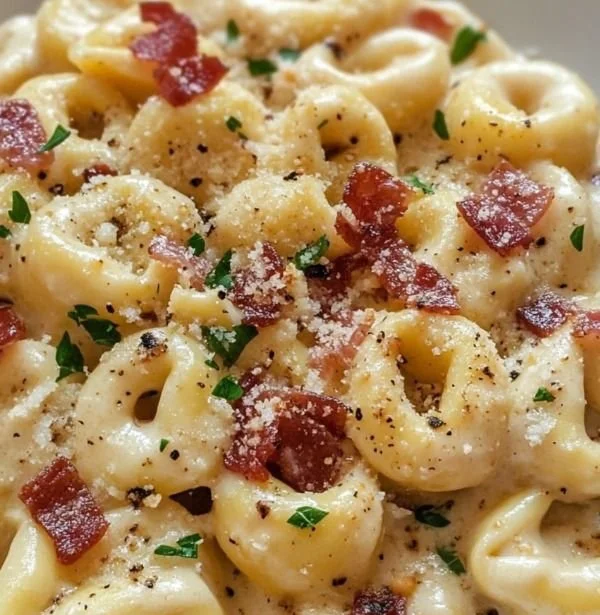
What makes this version work in 30 minutes
The key to finishing in 30 minutes is using fresh or refrigerated tortellini, cooking the pork and pasta simultaneously, and finishing the sauce off-heat with reserved pasta water. Fresh tortellini cooks in 2–4 minutes, which eliminates long boiling times. Relying on egg yolks mixed with finely grated cheese rather than heavy cream keeps the sauce concentrated, glossy, and quick to emulsify. The method prioritizes rapid transitions: render the pancetta while the water comes to a boil, then pasta cooks into the rendered fat for flavor and speed.
Ingredients with notes for best results
- 12–16 ounces fresh or refrigerated cheese tortellini (choose ricotta or three-cheese for creamy centers)
- 4–6 ounces pancetta or guanciale, diced (substitute thick-cut bacon if needed)
- 2 large eggs + 1 yolk (room temperature)
- 3/4 cup finely grated Pecorino Romano (or 1/2 Pecorino + 1/4 Parmesan)
- 1 teaspoon freshly cracked black pepper (plus more to finish)
- Kosher salt, to taste (pasta water will need a generous seasoning)
- 1–2 tablespoons reserved pasta cooking water per serving, as needed
- Optional: small handful of frozen peas or chopped flat-leaf parsley for color
Notes:
- Use Pecorino Romano for the signature salty, tangy flavor; Parmesan softens it if Pecorino is too sharp.
- Guanciale yields the most authentic flavor; pancetta or bacon are common and delicious substitutes.
- Fresh tortellini is fastest; frozen works but can add 2–3 minutes to cooking time.
Equipment needed
- 1 large pot for boiling pasta
- 1 heavy skillet (10–12 inch) for rendering pancetta
- 1 bowl for whisking eggs and cheese
- Tongs or slotted spoon for transferring tortellini
- Measuring cups and a microplane or fine grater for cheese
A wide skillet is preferable so the tortellini have surface contact with the fat and the egg mixture can coat evenly when combined.
Step-by-step instructions (timed to 30 minutes)
- Prep (0–5 minutes)
- Finely grate cheese and whisk with eggs and yolk until combined; add a generous crack of black pepper. Set aside. Dice pancetta/guanciale.
- Bring a large pot of water to a rolling boil and salt it well — it should taste like the sea.
- Render the pork (5–12 minutes)
- While water heats, place the skillet over medium heat and add diced pancetta. Cook until fat renders and edges are crisp but not burned, about 6–8 minutes. Reduce heat to low to keep warm.
- Cook tortellini (12–16 minutes)
- Add tortellini to boiling water and cook according to package directions (usually 2–4 minutes for fresh). Reserve 1 cup of pasta water before draining.
- Finish in the skillet (16–22 minutes)
- Using tongs, transfer tortellini directly into the skillet with the rendered fat. Toss quickly so the pasta picks up flavor.
- Emulsify the sauce (22–26 minutes)
- Remove skillet from heat. Let it cool for 20–30 seconds to avoid scrambling eggs. Add the egg-cheese mixture and toss vigorously. Add reserved pasta water a few tablespoons at a time to reach a silky consistency — the starch will help emulsify the sauce.
- Serve (26–30 minutes)
- Taste for salt and pepper (the cheese and pork are salty; add sparingly). If using peas, add a handful now and toss to warm. Plate immediately and top with extra grated Pecorino and cracked black pepper.
Timing tips: start the pasta water before you dice the pork; multitask to keep steps overlapping. The off-heat assembly is the critical short step that prevents scrambled eggs and yields a creamy finish.
Pro tips for a restaurant-quality finish
- Warm, not hot: always combine the eggs and pasta off the direct heat to avoid curdling. Residual skillet heat plus pasta warmth is enough to cook the eggs gently.
- Tempering method: if you worry about temperature control, ladle 2–3 tablespoons of hot pasta water into the egg-cheese mixture first, whisking constantly, then add that mixture back to the skillet.
- Save pasta water: a cup reserved is enough; add bit by bit—too much makes the sauce watery.
- Grate cheese fresh: pre-grated cheese has anti-caking agents that hinder melt and texture.
- Use tongs: they help toss and coat tortellini evenly with the sauce.
- Finish with coarse black pepper: it’s a classic flavor note and adds aromatic lift.
Storage and reheating instructions
- Short-term: Store leftovers in an airtight container in the refrigerator up to 2 days. Keep excess rendered pork separate if possible.
- Reheating stovetop: Reheat gently in a nonstick skillet over low heat with a splash of milk or reserved pasta water to loosen sauce; stir constantly to reincorporate.
- Microwave: Not ideal — if necessary, cover and heat in short intervals, stirring and adding liquid to prevent drying.
- Freezing: Not recommended; egg-based sauces separate when frozen and lose silkiness.
If planning for make-ahead meals, cook tortellini al dente and keep sauce components separate. Reheat and combine just before serving for best texture.
Pairings and serving suggestions
- Vegetables: A crisp arugula salad with lemon vinaigrette or sautéed broccolini provides contrast to the richness.
- Wine: A bright Pinot Grigio or unoaked Chardonnay balances the salty cheese and pork.
- Bread: Serve with toasted focaccia or garlic-rubbed sourdough to mop up any remaining sauce.
- Add-ons: Finish plates with lemon zest for brightness, or a few drops of good olive oil for sheen.
Variations to suit different diets and flavors
- Vegetarian: Replace pancetta with a mushroom mix sautéed in olive oil and smoked paprika for umami. Add peas for sweetness.
- Creamy (non-traditional): Stir in 1/4 cup heavy cream with the eggs for an extra-luxurious texture — note this departs from classic carbonara technique.
- Protein swaps: Use leftover rotisserie chicken or shredded ham for a different texture; add it just before finishing so it warms through.
- Spicy: Add red pepper flakes while rendering the pork or finish with Calabrian chili paste for heat.
- Gluten-free: Use fresh gluten-free tortellini and adjust cooking time per package.
For inspiration on other tortellini preparations, consider a saucy tomato-based option like the popular Marry Me Tortellini, which demonstrates how tortellini pairs with robust sauces.
Common mistakes and how to avoid them
- Scrambled eggs: Caused by adding egg mixture to a skillet that’s too hot. Remove pan from heat and wait 20–30 seconds before adding eggs.
- Not salting the water: Under-seasoned tortellini results in a flat final dish; salt the boiling water generously.
- Overcooking tortellini: Leads to mushy centers; aim for al dente since residual heat continues to cook the pasta during sauce assembly.
- Adding too much water at once: Dilutes the sauce. Add reserved water a tablespoon at a time until you reach a glossy, clingy consistency.
- Using pre-grated cheese: Impacts melt and texture; freshly grated cheese yields the best emulsion.
Frequently asked questions
- Can I use whole eggs only?
- Yes, but adding an extra yolk increases richness and helps the sauce bind. If using only whole eggs, expect a slightly thinner finish.
- Are raw eggs safe in carbonara?
- When eggs are mixed with hot pasta and allowed to warm gently, they reach a safe, cooked temperature. Use pasteurized eggs if concerned.
- Can I make this with dried tortellini?
- Dried tortellini works but typically takes longer to cook; adjust timing and expect a slightly different texture.
- What’s the difference between carbonara and Alfredo?
- Carbonara relies on eggs and cheese for its sauce emulsion and typically includes cured pork, while Alfredo uses cream and butter as the base.
Conclusion
This technique delivers a quick, glossy tortellini carbonara that balances speed with classic technique—perfect for weeknight dinners when you want something impressive without a long cook time.