Creamy Garlic Chickpea Soup
Creamy Garlic Chickpea Soup
A silky, savory bowl that balances nutty legumes with bright garlic and warming spices, this recipe transforms pantry staples into a restaurant-quality starter or weeknight dinner. It uses simple techniques—browning, simmering, and blending—to build depth without long hands-on time, making it an accessible comfort soup for busy households. For fans of bold, garlicky broths, this is in the same comforting vein as a classic ginger garlic chicken noodle soup recipe that layers aromatics for maximum flavor.
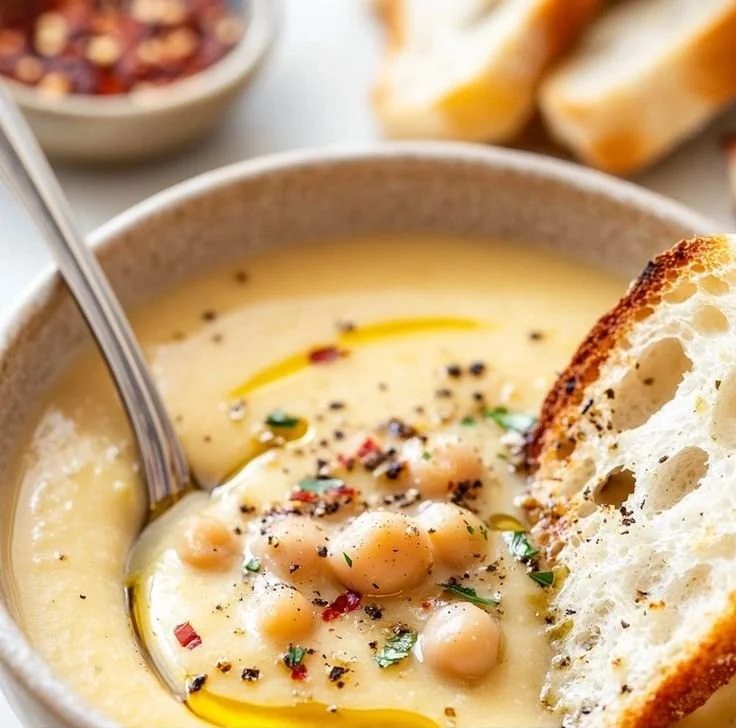
What makes this version stand out
This take relies on three flavor-building moves: toasting spices to release oils, gently caramelizing aromatics for sweetness, and finishing with an emulsion for creaminess rather than heavy dairy. The texture is lush because a portion of the legumes are blended to thicken the broth naturally, while whole chickpeas remain for bite. The garlic is mellowed by slow cooking, so it sings rather than bites, and a squeeze of acid at the end brightens the whole pot.
Ingredients (with precise notes)
- 2 tablespoons olive oil — use extra-virgin for finishing, lighter olive oil for cooking if preferred
- 1 large yellow onion, finely diced
- 6–8 large garlic cloves, smashed and thinly sliced (adjust down if sensitive)
- 2 medium carrots, diced
- 2 celery stalks, diced
- 1 teaspoon ground cumin
- 1/2 teaspoon smoked paprika (optional for warmth)
- 1/4 teaspoon red pepper flakes (optional for heat)
- 2 (15-ounce) cans chickpeas, drained and rinsed — reserve 1/2 cup for garnish
- 4 cups low-sodium vegetable broth (or chicken broth for a richer base)
- 1 cup water (adjust for desired thickness)
- 1/2 cup plain Greek yogurt or coconut milk (for dairy-free)
- 1 bay leaf
- Kosher salt and freshly ground black pepper, to taste
- 2 tablespoons lemon juice, plus extra for serving
- Fresh parsley or cilantro, chopped, for garnish
- Toasted pine nuts or crushed pita chips, optional topping
Notes:
- Canned chickpeas keep this fast; if using dried, cook until tender first and reserve some cooking liquid to adjust consistency.
- Greek yogurt adds tang and protein; coconut milk will yield a sweeter, dairy-free finish.
- Low-sodium broth allows you to control final seasoning.
Equipment needed
- Large heavy-bottomed pot or Dutch oven
- Immersion blender (preferred) or countertop blender
- Chef’s knife and cutting board
- Measuring cups and spoons
- Wooden spoon or heat-resistant spatula
- Fine-mesh sieve (optional, for silky finish)
Step-by-step instructions
Prepare aromatics:
- Heat oil over medium heat in the pot until shimmering.
- Add the onion, carrots, and celery with a pinch of salt. Cook, stirring occasionally, until the onion is translucent and the carrots begin to soften, about 6–8 minutes.
Build garlic and spices:
- Add the sliced garlic, cumin, smoked paprika, and red pepper flakes. Stir constantly for 30–60 seconds until fragrant and the garlic turns golden at the edges—avoid burning.
Add legumes and liquid:
- Stir in the chickpeas, then pour in broth and water. Add the bay leaf.
- Increase heat to bring to a gentle simmer. Lower heat and simmer uncovered for 18–22 minutes to meld flavors.
Blend for creaminess:
- Remove bay leaf. For a textured creaminess, use an immersion blender to puree roughly half the pot directly in the pot until you reach a balanced mix of smooth base and whole chickpeas. Alternatively, transfer 3 cups to a countertop blender, puree until smooth, and return to the pot.
Finish and season:
- Stir in Greek yogurt or coconut milk off the heat to avoid curdling. Add lemon juice and season with salt and pepper to taste.
- If the soup is too thick, thin with hot water or reserved chickpea liquid a few tablespoons at a time.
Serve:
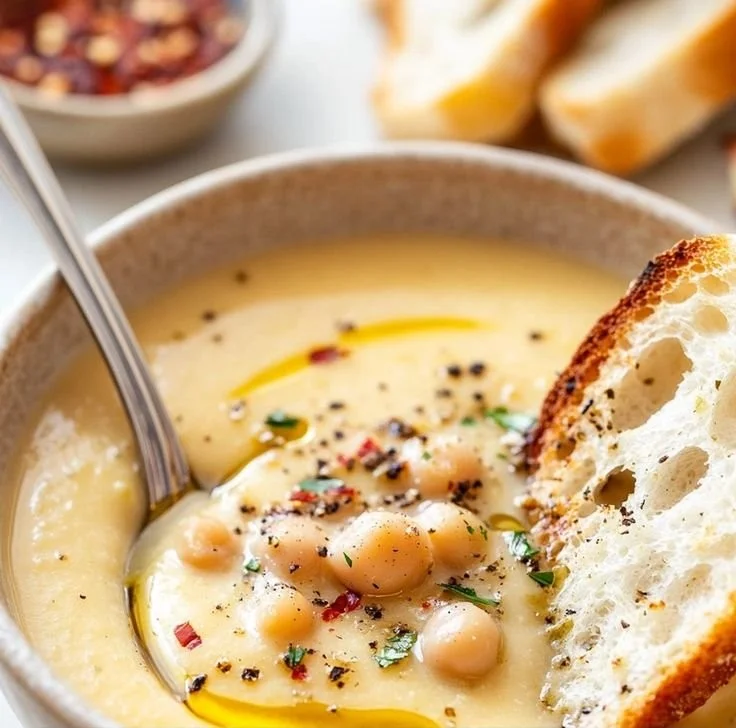
- Ladle into bowls, garnish with reserved whole chickpeas, fresh herbs, a drizzle of olive oil, and toasted pine nuts or pita crumbs for crunch.
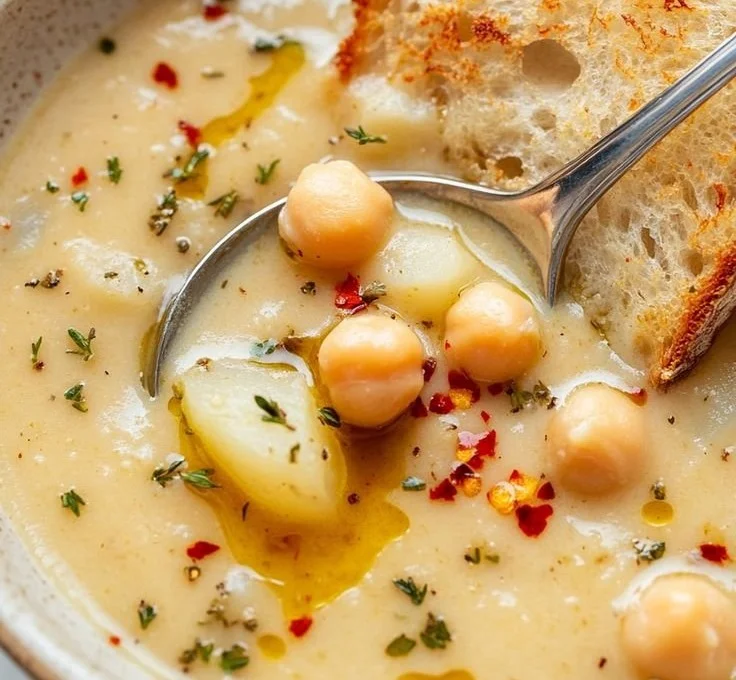
Pro cooking tips for the best texture and flavor
- Brown, don’t burn the aromatics: Caramelization adds sweetness; charred garlic tastes bitter. Maintain medium heat and stir frequently when garlic is added.
- Toast spices briefly in the hot oil to unlock deeper aromas before adding liquids.
- Save some whole legumes: textural contrast between smooth soup and intact chickpeas improves mouthfeel and visual appeal.
- Use an immersion blender for control: it allows you to puree to the exact consistency without moving hot liquids.
- Adjust acidity at the end: lemon and a small splash of vinegar can brighten the soup after all seasoning is combined.
- If you want a silkier finish, press the blended soup through a fine-mesh sieve to remove any skins or fibrous bits.
Storage, reheating, and meal prep
- Refrigerate: Cool to room temperature and store in an airtight container for up to 4 days.
- Freeze: Portion into freezer-safe containers for up to 3 months. Leave ~1 inch headspace to allow expansion.
- Reheat: Gently rewarm on low heat, stirring often. Add a splash of broth or water if the soup thickened in the fridge or freezer.
- Meal prep tip: Keep garnishes separate and add fresh herbs, a squeeze of lemon, or crunchy toppings just before serving to preserve texture.
Pairings and serving suggestions
This style of legume-based cream soup pairs well with fresh, herb-forward sides and warm bread. Consider:
- Crusty sourdough or warm pita for dipping
- A crisp green salad with lemon vinaigrette to balance the richness
- Light, herbaceous wines or a crisp pilsner for a drink pairing
For a different comforting combo, serve alongside a bold, ranch-style soup like this creamy chicken enchilada soup for a crowd-pleasing winter menu where one dish is spicy and the other is mellow and garlicky.
Variations and dietary swaps
- Vegan: Substitute coconut milk for yogurt and use vegetable broth.
- Higher-protein: Add shredded rotisserie chicken during the last 5 minutes of simmering.
- Lower-carb: Serve over cauliflower rice or with a side of roasted vegetables instead of bread.
- Spicier: Increase red pepper flakes or stir in harissa or sriracha to taste.
- Herb-forward: Stir chopped dill or basil into bowls right before serving for a fresh finish.
Common mistakes and how to avoid them
- Over-blending to a complete puree: This removes pleasant bite. Stop once about half the legumes are broken down.
- Adding acid too early: Lemon or vinegar added during cooking can flatten the garlic flavor; add at the end for brightness.
- Under-seasoning: Chickpeas need salt. Taste and adjust at the end, especially if using low-sodium broth.
- Rushing the aromatics: Sautéing onions and garlic long enough is essential; rushing leads to flat flavor.
- Using high heat when adding dairy: Yogurt or milk added to boiling liquid can separate; temper by off-heat stirring or lowering the pot’s temperature.
Frequently asked questions
Q: Can I use dried chickpeas?
A: Yes. Soak and cook them until tender before starting, and reserve some cooking liquid to thin the soup if needed. Dried beans will deepen flavor but increase prep time.
Q: How can I make the soup thicker without dairy?
A: Puree a larger portion of legumes or stir in a small amount of tahini for richness and a subtle nuttiness.
Q: Is there a way to reduce sodium without losing flavor?
A: Use low-sodium or homemade broth and boost aromatics, add lemon zest, and finish with fresh herbs to compensate for less salt.
Q: Can I prepare this in an Instant Pot?
A: Yes. Sauté aromatics using the sauté function, add remaining ingredients, and cook on high pressure for 10 minutes with a natural release. Blend partially before finishing.
Q: What garnishes work best?
A: Fresh herbs, a drizzle of good olive oil, toasted seeds or nuts, and a lemon wedge are the simplest and most effective.