Burger Bowls
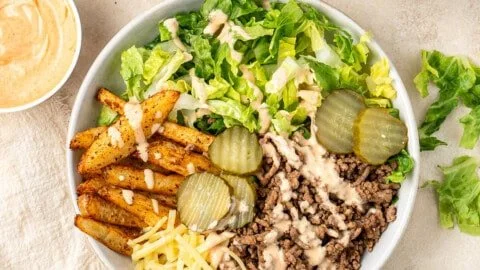
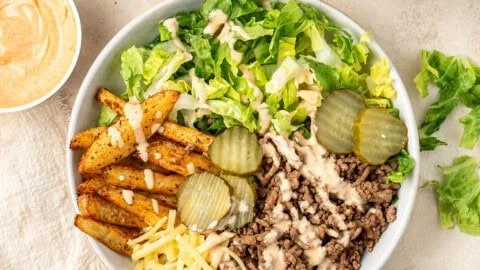
A practical, flavor-forward guide to building hearty burger bowls that hit the same cravings as a classic sandwich without the bun. These portable bowls focus on seasoned ground beef or alternative proteins, crisp veggies, melty cheese, and layered sauces for a complete, low-carb-friendly meal. For a bold patty base you can adapt to bowls, see this smoky chipotle patty method to spice up the protein layer: smoky chipotle burger patties recipe.
Key components to plan before assembling
Think in layers: cooked protein, a warm grain or base (or extra greens for lower carbs), crunchy vegetables, cheese, and a finishing sauce. Choose one starch (rice, potatoes, or fries), one protein style, and two fresh toppings to keep bowls balanced and predictable when prepping for a week. Portion planning ensures consistent macros and avoids soggy ingredients.
Best proteins and how to cook them for bowls
Ground beef is classic; use an 80/20 blend for juiciness and season simply with salt, pepper, and garlic powder. For leaner bowls, mix turkey or plant-based crumbles with a tablespoon of oil to mimic fat. Pan-sear or form small patties and crumble after cooking so the pieces distribute evenly across the bowl. For a smokier profile, adapt the protein with chipotle or smoked paprika—this technique pairs well with recipes that rely on bold seasoning and is an easy swap into bowl builds: chipotle-seasoned protein how-to.
Starch and vegetable pairings that hold up
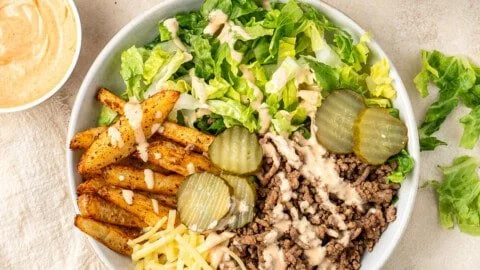
Choose roasted potatoes, oven-baked fries, or a warm grain like farro or brown rice for a filling base that resists moisture. Crisp vegetables—shredded cabbage, sliced radish, pickles, or chopped iceberg—provide texture contrast and prevent the bowl from feeling mushy. Cook and cool starchy components before topping to maintain structure during storage.
Toppings and sauces that make bowls sing
Melty cheddar, crumbled blue cheese, or sliced American add the familiar burger feel. Finish with layered sauces: a savory mayo-based house sauce, ketchup reduction, or mustard vinaigrette for brightness. Build sauces to complement the protein’s seasoning—smoky meats pair with tangy, creamy sauces while lean proteins benefit from fattier dressings. For assembly-friendly sauces and creamy finishes, consult this practical guide to pairing condiments with seasoned burger-style proteins: condiment pairing and preparation ideas.
Assembly, storage, and reheating tips
Assemble bowls with the warm base first, protein next, then cheese so it melts gently, and fresh toppings last. Store dressings separately when meal-prepping to prevent sogginess. Reheat covered in the oven or microwave until warm; add fresh toppings at serving time. For multi-day prep, freeze portions without delicate garnishes and thaw overnight in the refrigerator.
Quick variations to match common cravings
- Classic cheeseburger style: seasoned beef, shredded lettuce, diced tomato, cheddar, and a toasted onion-infused dressing.
- BBQ bowl: smoked or seasoned beef, roasted sweet potato, corn, cheddar, and a bbq-mayo drizzle.
- Veg-forward option: spiced plant-based crumbles, quinoa, pickled onions, avocado, and a smoky aioli.
Conclusion
If you want ready-made inspiration, try this detailed take on a burger bowl with house sauce and crispy fries for an indulgent version: Burger Bowls with House Sauce and Ranch Fries Recipe – Pinch of Yum. For a clean, customizable loaded bowl template that’s simple to adapt, see this home-style recipe guide: Loaded Burger Bowls Recipe | Simple Home Edit.